Views: 0 Author: Adhaiwell Publish Time: 2026-09-10 Origin: Site
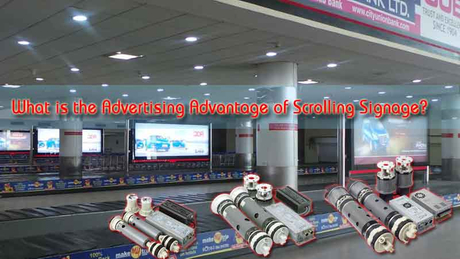
A scrolling poster display kit is the motor, roller and control system that turns a single static light box panel into a rotation of up to six posters per side. Choosing the right one is mostly an exercise in matching three numbers — panel area, roller diameter and motor power — to the sign you already have or plan to build. Get those numbers right and the kit runs for years with minimal attention; get them wrong and you will spend your days re-tensioning paper. This guide walks through what the kit actually contains, which size fits which sign, and what to check before you wire money to a supplier.
A scrolling poster display kit converts one static light box panel into a rotation of up to six posters per side, so kit selection starts with panel area, not price.
Match the model to the panel: HW-51A up to 3 sqm, HW-76A series from 6 to 15 sqm, HW-120A from 12 to 18 sqm.
Roller diameter, BLDC motor power and digital tension control are the three specifications that decide poster life and maintenance frequency.
Before ordering from any China scrolling kit manufacturer, verify factory testing, synchronization control, power options and spare-part supply.
The direct answer: a scrolling poster display kit is the complete drive package for a multi-poster light box, and four components determine whether it performs — the motor, the rollers, the controller and the power supply.
BLDC motor (brushless DC): the drive heart of every serious kit. Brushless motors run cooler, quieter and far longer than brushed alternatives, which matters when the unit cycles posters 24/7 on a street.
Roller set: two or more tubes that carry the poster loop. Roller diameter controls how tightly the paper bends at each turn — a bigger diameter means less stress on the print.
Digital controller: regulates scrolling speed, direction and dwell time per poster. On a well-designed kit the controller also manages paper tension digitally, which is what keeps posters positioned correctly frame after frame.
Power supply and timer: quality kits accept 220 V or 110 V AC, with a 12 V DC option for solar or battery installations, and include a two-channel timer so the display can rest overnight.
A kit is "complete" when all four arrive matched to each other. Mixing a generic motor with an afterthought controller is the most common reason cheap scrolling systems fail in the field.
The direct answer: because a static panel sells one advertising slot, while a scrolling system sells up to six on the same panel — and the out-of-home market is growing fast enough that leaving that revenue on the table is getting harder to justify.
The World Out of Home Organization estimates global DOOH spend at US25.5 billion in 2025, rising to US28 billion in 2026. Media owners are under pressure to show more inventory from the same street furniture footprints.
One backlit panel rotating six posters multiplies sellable inventory without buying land, permits or a new structure. For an operator with hundreds of panels, that is a step change in capacity.
Motion itself is the product. Advertisers pay more for a position where their message appears six times in a loop than for one static placement, because repeated exposure in the same spot is what builds recall.
These figures come from commercial research reports whose methodologies differ; treat them as directional context for the market, not as a revenue forecast for any specific network.
The direct answer: match the kit to panel area first and poster width second. The Adhaiwell SPDE range covers three tiers, and most projects fall cleanly into one of them.
Kit | Roller diameter | Max poster width | Panel area | Max power |
SPDE HW-51A / 51AE / 51AX | 51 mm | 2 m | up to 3 sqm (1.5 x 2 m) | 50 W |
SPDE HW-76A | 75 mm | 3.5 m | under 6 sqm (3 x 2 m) | 70 W |
SPDE HW-76AE / 76AX | 80 mm | 5 m | 12 sqm (4 x 3 m) / 15 sqm (5 x 3 m) | 150 W |
SPDE HW-120A | 120 mm | 6 m | 12 to 18 sqm (4 x 3 m to 6 x 3 m) | 220 W |
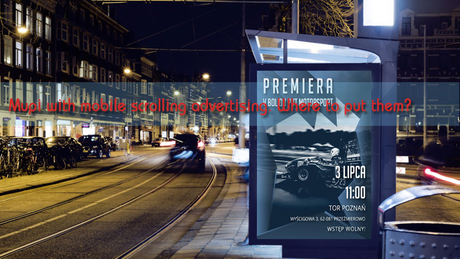
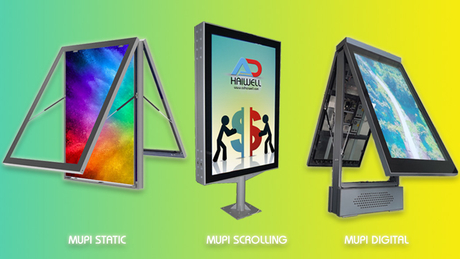
City light boxes and MUPI panels (typically 1.2 x 1.8 m) sit comfortably in the HW-51A tier. The 51 mm roller is sufficient because poster loop lengths are short.
Street furniture and mid-size billboards from 3 x 2 m upward belong to the HW-76A series — this is the best-selling tier because it covers the most common city media formats, including 4 x 3 m classic billboards on the 76AE.
Large-format frontage signs at 4 x 3 m to 6 x 3 m need the HW-120A, whose 120 mm rollers handle the long, heavy poster loops that smaller rollers would strain.
If your panel sits between tiers, size up. An undersized kit working at its limit will wear out faster than an oversized one loafing along. For a worked example of how one manufacturer splits these tiers, Adhaiwell's SPDE scrolling kit range publishes per-model roller diameters, widths and power figures — the same three numbers you should ask any supplier to state in writing.
The direct answer: larger rollers bend the poster more gently and BLDC motors control tension more precisely — together they are the reason a good scrolling system can double or triple poster life compared with older scrolling designs.
Every time a poster wraps around a roller, the print and the paper take a stress cycle. A 51 mm roller demands a tighter bend than a 120 mm one; over thousands of cycles, the tighter bend shows up as curling, cracking and edge wear sooner.
Adhaiwell states that its full digital control minimizes paper tension and extends poster life two to three times versus traditional scrolling systems (operator-reported, not independently audited). The mechanism is straightforward: the controller holds tension at a setpoint instead of letting it drift, so the paper is never over-stretched.
BLDC motors hold speed under varying load — a poster loop gets heavier and lighter as it winds from one roller to the other — and they do it without the brush wear that ends brushed-motor life in a year or two of continuous duty.
Practical implication for buyers: ask any supplier what roller diameter they use at your panel size, and whether tension is digitally regulated or adjusted by hand during installation. Hand-tensioned systems are the ones that need a technician to revisit every panel after the season's first temperature swing.
The direct answer: anywhere foot or vehicle traffic passes the same point repeatedly — transit hubs, city street furniture and retail districts are the three formats where scrolling light boxes earn their keep.
Transport hubs: commuters stand still and look around. A station concourse light box that cycles six posters reaches the same person several times during a single wait, which is exactly what advertisers pay a premium for.
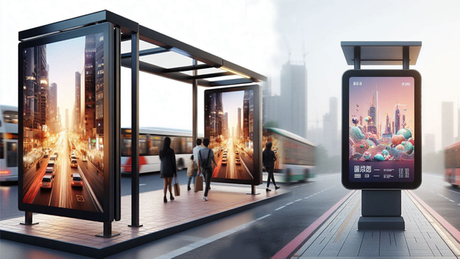
City street furniture: bus shelters, free-standing city light boxes and shopping-district MUPI panels benefit from the "6 slots on 1 panel" economics, and from the fact that a scrolling retrofit usually fits inside the existing cabinet and existing permit footprint.
Retail and indoor environments: malls and airport corridors run scrolling boxes on the same kits — the indoor units simply use the quieter BLDC drives and skip weather-proofing options.
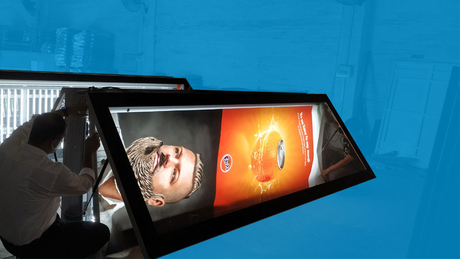
Indoors or outdoors, the complete cabinet matters as much as the kit inside it; media owners often pair the drive system with purpose-built multi-poster city scrolling light boxes rather than retrofitting unrelated enclosures, because cabinet geometry and roller spacing were engineered together.
One caveat: rules on outdoor advertising structures, poster content and electrical installation differ by country and often by city. Confirm the local permit situation before committing to a network rollout.
The direct answer: ask for evidence in four areas — factory testing, control capability, power compatibility and after-sales support — before you compare prices.
Pre-shipment testing: every kit should be run under power before it ships. Adhaiwell runs each SPDE kit for 24 hours in the factory before dispatch (operator-reported); ask any prospective supplier what their equivalent process is, and ask to see test records with your order.
Synchronization: if your network will run multi-unit signs or pair scrolling panels with digital screens, confirm that synchronization between units is built into the controller rather than bolted on afterwards.
Power options: confirm the kit accepts your local supply — 220 V or 110 V AC — and ask about the 12 V DC option with a converter if any of your sites are off-grid or battery-backed.
Paperwork and spares: a legitimate export manufacturer ships with correct HS classification (scrolling kits fall under 9405600000), and commits to spare rollers, belts and controllers for at least the first years of the network. A supplier who cannot promise spares is selling you a disposable product.
Evidence over claims: the SPDE scrolling poster display system kits built in Shenzhen are one reference point — the manufacturer has supplied scrolling advertising systems for over ten years and publishes per-model specifications, which is the level of documentation you should demand from anyone quoting your project.
Buyers who run this checklist usually find that the quoted price difference between suppliers shrinks once testing, spares and synchronization are priced in.
Adhaiwell has manufactured scrolling advertising systems in Shenzhen for more than ten years, across city light box networks and large-format frontage signs, and runs a 24-hour power-on test on every kit before shipment. Those are the answers below.
How many posters can one scrolling kit rotate? Up to six posters per side on Adhaiwell SPDE kits. More posters mean shorter dwell time per image, so six is the practical sweet spot for street-level readability. The controller sets how long each poster holds.
Can one kit run posters on both sides of a double-sided light box? Yes — installations typically use one drive system per face so each side can run an independent loop. Built-in synchronization keeps multi-unit installations aligned when required.
What power supply does a scrolling kit need? SPDE kits accept 220 V AC, 110 V AC, or 12 V DC with a converter. Draw ranges from 50 W on the smallest kit to 220 W on the HW-120A, which is modest compared with any digital screen.
How often do posters need replacing? Poster replacement is a manual job — open the cabinet, swap the printed loop, close it. How often depends on your campaign calendar, not the hardware. The hardware's contribution is that digital tension control means posters come out undamaged and reusable.
What is the lead time and shipping class for these kits? Scrolling kits ship as standard industrial equipment under HS code 9405600000. Lead time depends on order volume and model mix; confirm both with the supplier alongside spare-part availability before signing.
Let's light up the future of advertising together
Mon - Fri: 9 AM - 6 PM
Sat - Sun: 11 AM - 3 PM





 English